

EU carbon values under pressure on recession, demand worries
Sentiment in the European carbon price market remained bearish in the week to Feb. 2 amid muted demand. Traders and analysts have said they expect prices to remain around Eur60-65/mtCO2e in the coming week, with macroeconomic concerns and reduced power generation dominating headlines.
EU Allowances under the bloc’s Emissions Trading System were trading at Eur63.22/mtCO2e at 1038 GMT on Feb. 2 compared with Eur63.58/mtCO2e on Jan. 26.
Platts, part of S&P Global Commodity Insights, assessed EUA contracts for December delivery at Eur62.19/mtCO2e on Feb. 1.
Many analysts have downwardly revised their EUA price forecast for 2024 due to recession concerns and reduced emissions from the power and industrial sectors.
Analysts at S&P Global expect 2024 average prices to plunge to Eur63.90/mtCO2e compared with Eur85.30/mtCO2e in 2023 and Eur81.50/mtCO2e in 2022.
“EUA prices are expected to decline further due to the expectation of a technical recession despite a resilient labor market,” they said in a recent note. “The slowdown is broad-based affecting sectors like construction, manufacturing, and services. We expect prices to hit the high Eur50/mt mark threshold in February.”
Climate reforms
On Feb. 6, the European Commission is likely to recommend that the EU commit to a 90% reduction in emissions by 2040, which could provide some relief to declining prices.
This target is being backed by several EU countries, but climate policies have become heavily politicized recently, with farmers across Europe currently protesting against costly clean energy regulations.
But many policymakers, analysts and climate scientists insist that the EU must commit to this if it has any realistic chance of reaching net zero by 2050.
The European Council has set a goal for the EU to cut its greenhouse gas emissions by at least 55% by 2030, compared with 1990, and become climate neutral by 2050.
Meanwhile, the inclusion of the maritime sector in the EU ETS, opens up a new set of buyers for EUAs.
The European Commission published a document Jan. 31 attributing each shipping company to an EU member state to help these companies register for EU ETS compliance.
Shipping companies can now open holding accounts to trade EUAs and manage their ETS exposure.
Under the EU ETS guidelines, shipping companies must surrender their first ETS allowances by Sept. 30, 2025, for emissions reported in 2024.
The EU has also agreed on a phase-in period to give the industry some preparation time, with the ETS covering 40% of the emissions in 2024, 70% in 2025 and 100% from 2026 onward.
The shipping sector’s inclusion is projected to add emissions of 90 million mtCO2e this year, which is around two-thirds of the sector’s emissions.
CBAM extension
Meanwhile, the European Commission extended has the period for declarants to submit their quarterly reports under the Carbon Border Adjustment Mechanism by 30 days from the original deadline, after a significant number of importers experienced technical issues that led to some businesses being unable to make submissions.
The new carbon border tax entered into application in a transitional phase Oct. 1, with the first reporting period for importers originally set to end Jan. 31.
CBAM essentially levies a tax on imports of selected carbon intensive materials and products (including aluminum, cement, electricity, fertilizers, hydrogen, iron and steel) into the EU, removing the gap between the EU ETS carbon price and the export country of origin’s carbon price.
The main purpose of the tax is to reduce the risk of carbon leakage — as a result of EU industries locating abroad — and encourage importer nations to introduce their own carbon markets and, so, limit CBAM impacts on their traded goods.
No penalties will be imposed on reporting declarants experiencing difficulties in submitting their first CBAM report, the commission said.
“While the system has been working well in previous days with data and many reports being submitted successfully, technical teams are working around the clock to rectify remaining issues,” the EC said.
The commission has encouraged those reporting declarants that do not encounter any major technical issues to submit their CBAM report by the end of the reporting period.
Author: Eklavya Gupte, eklavya.gupte@spglobal.com

CBAM complications, safeguard hinder steel activity: Assofermet
The normative framework of the EU Carbon Border Adjustment Mechanism (CBAM) and safeguards on steel imports is hindering the daily activity of Italian and European steel companies, says Italian steel trade association Assofermet.
The challenges in filling CBAM reports, the economic repercussions expected from the mechanism starting in 2026, as well the safeguard measures in force from 2018 are a deep concern for Assofermet’s many members.
The European Commission (EC)’s Directorate General for Trade and the Directorate General for Taxation and Customs Union asked the association to highlight the critical issues of the mechanism to help with drafting the final version. “It has been assured that our perspective will be taken into account, especially for the future evolution of CBAM … Agreeing that CBAM will also generate increased costs for downstream end-users in the steel supply chain, it was pointed out to the Commission that if certain finished products … are not included in the mechanism, the European industry will lose competitiveness, given its global role,” Assofermet warns in a note sent to Kallanish.
The association notes an open-minded attitude from Italian authorities to listen to the problems of the entire steel supply chain stemming from regulations and willingness to continue dialogue on the regulatory framework. While the first quarterly report deadline for CBAM has passed, the safeguard on steel imports is currently set to expire at the end of June 2024. “There are no official updates yet on a possible extension after the first half of this year,” Assofermet concludes.
31 January was the deadline for importers to submit their first report detailing emissions as part of CBAM. The European Commission nevertheless announced this week that due to a technical incident, it is offering the possibility to request for a 30-day delay for submission (see Kallanish passim).
During the ongoing transitional phase of CBAM, European importers of steel need to file quarterly reports in the European Commission system, starting from those for the fourth quarter of 2023. During the transitional period, importers are required to report on the quantity of imported goods and resulting direct and indirect emissions. No payments will be due. The transitional phase is planned to conclude at the end of 2025.
Natalia Capra France

European Commission extends first CBAM report submission deadline
“In accordance with the guidance provided to National Competent Authorities (NCAs), no penalties will be imposed on reporting declarants who have experienced difficulties in submitting their first CBAM report. Delayed submission of a CBAM report due to system errors would, by definition, be deemed justified as long as the submission occurs promptly once the technical errors are overcome. In any event, penalties will not be imposed by NCAs before a correction procedure has been opened, allowing reporting declarants to provide justifications and correct any potential inaccuracies in their CBAM report,” the European Commission explains.
During the ongoing transitional phase of CBAM, European importers of steel need to file quarterly reports in the European Commission system, starting from those for the fourth quarter of 2023. During the transitional period, importers are to report on the quantity of imported goods, direct and indirect emissions embedded in them, and any carbon price due for those emissions, including carbon prices due for emissions embedded in relevant precursor materials; no payment will be due. The transitional phase is planned to conclude at the end of Q4 2025.
Emanuele Norsa Italy

Acciaierie d’Italia low output impacts EU steel availability: Assofermet
The prolonged ownership crisis at Acciaierie d’Italia (ADI) and its lower output may lead to a structural shortage of flat steel products, not only in Italy but also at a European level, Italian steel trade association Assofermet warns.
“The quality products available thanks to Taranto production are very often not available within the EU perimeter. Buyers are therefore forced to turn mainly to Asian steel mills, facing import restrictions which increase costs … The crisis at ADI is part of an already very complicated context for the steel sector,” Assofermet says in a document sent to Kallanish.
EU safeguard measures result in a decrease in the quantity of steel imported into the EU. The Carbon Border Adjustment Mechanism (CBAM) will meanwhile introduce a tax on goods coming from territories outside the EU from 2026. The result will be an inevitable increase in the cost of steel products available in the EU.
“The national [Italian] manufacturing sector’s growth needs a primary steel industry, upstream of the supply chain, that can support it with the necessary quantity of steel,” comments president of Assofermet’s flat steel division Paolo Sangoi.
ADI’s production crisis is happening at a time of low steel availability in Italy and Europe. “Steel output is decreasing: the production levels of 2012, the year of the seizure of the hot-end area of the Taranto plant, have not been reached over the past ten years … With declining steel production and the rising cost of steel, it is essential to preserve the industrial value of the plant,” Assofermet concludes.
ADI, the joint venture between state company Invitalia and ArcelorMittal, registered steel output below 3 million tonnes in 2023, according to preliminary data. This is below the shareholders’ initial objective of 4mt in 2023 and 5mt target in 2024.
ArcelorMittal says it is open to an amicable solution to the conflict with authorities, and prepared to give up its stake to partner Invitalia for a price that “is only a fraction” of the company’s investment into ADI since 2018. While Invitalia refused ArcelorMittal’s recent offer, the steelmaking group assures it is still on the table (see Kallanish passim).
Natalia Capra France
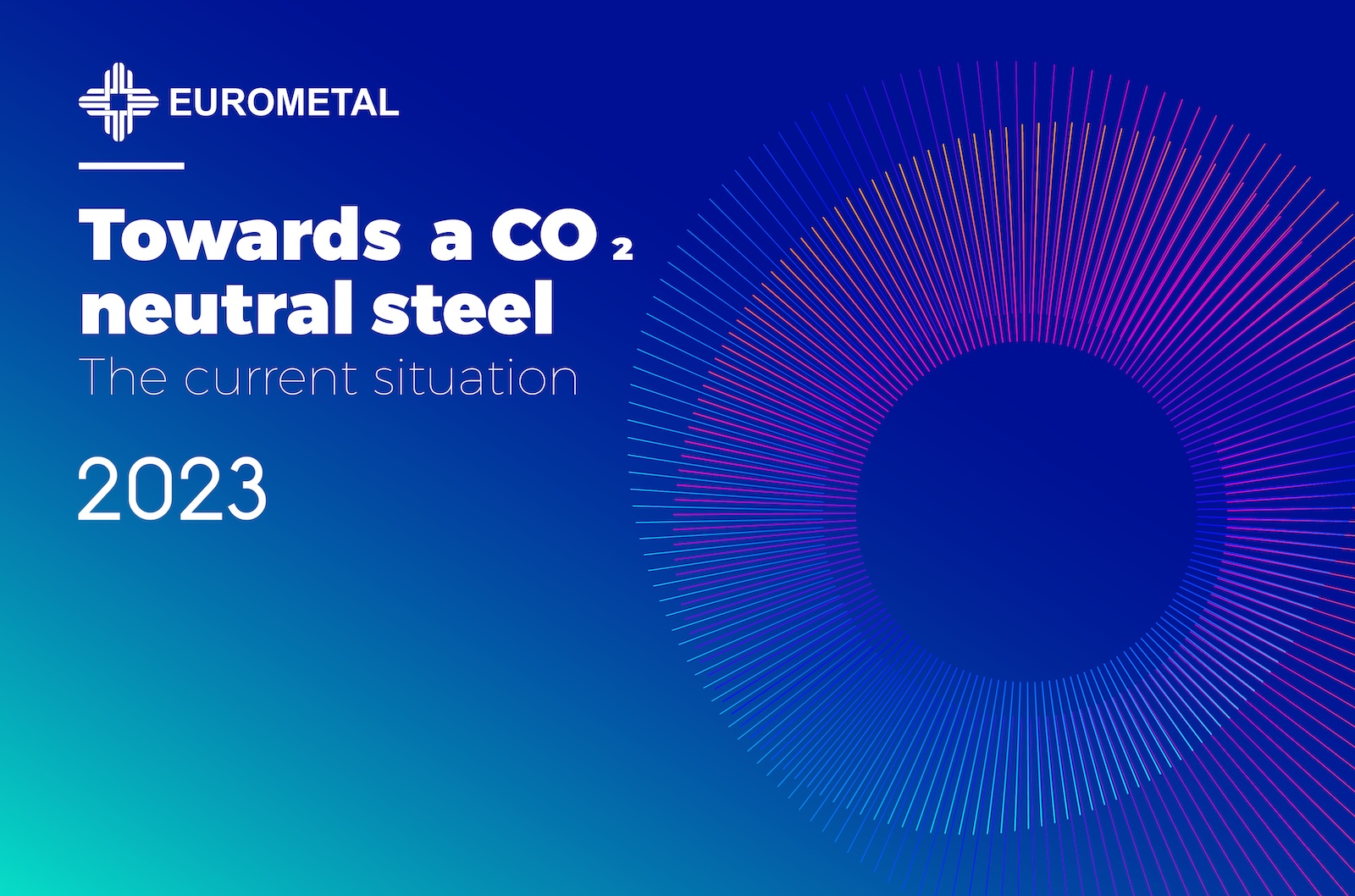
EUROMETAL whitepaper: Towards a CO2 neutral steel – The current situation
EUROMETAL have been publishing a whitepaper annually on topics relevant to steel distributors but also to the entire supply chain.
This year we have made it our mission to address the sustainability and decarbonization of our industry.
We are pleased to announce our Whitepaper “Towards a CO2 neutral steel – The current situation”.
This document is divided into chapters:
- Initial considerations on green steel
- Alternative production technologies
- The EU emissions trading system
- Marketing the low emission steels
- Checking CO2 on imports with CBAM
EUROMETAL aims, with this document, to shed light on the challenges encountered by the European steel industry, both exploring some technological options and explaining the current legal framework for CO2 emissions.


CBAM export impact concerns EU steelmakers: Federacciai
The transitional phase of the EU’s Carbon Border Adjustment Mechanism (CBAM) will begin on 1 October. As the implementation approaches, market participants in Europe are discussing the new system and its challenges. Steelmakers remain concerned for the future of steel exports.
Flavio Bregant, director general of Federacciai, the Italian steelmakers’ association, confirmed in a webinar on Thursday attended by Kallanish that the main problem for steelmakers is CBAM’s impact on their exports once the transitional phase is completed. CBAM’s full implementation is scheduled from January 2026.
“At the moment, CBAM only covers imports. We are happy to hear from the European Commission that they will look into the issue of exports in 2025, but we have explained the problem multiple times already and until now we have received no answers,” Bregant lamented.
From the beginning of 2026, free allocations of Emissions Trading System (ETS) certificates will be phased out, further increasing costs of production for European steelmakers to ensure the low-emission transformation takes place. This is set to make European steelmakers less competitive in the international steel market, hence the difficulties in exporting if fiscal support is not secured from the European Commission.
“Personally, I see exports of European steel products falling to zero once CBAM is fully implemented. This will result in the need for European steelmakers to reduce output at their mills, while keeping the doors open to imports,” Bregant explained. “I see exports falling, not imports.”
Other representatives of the steel supply chain, on the other hand, are concerned by the potential reduction in EU imports as a result of CBAM implementation (see related articles).
In 2022, European steelmakers exported over 16 million tonnes of finished steel products. This figure is over 10mt below the record levels registered in 2012-2016.
Emanuele Norsa Italy

Protectionism, geopolitics, economic challenges weigh on longs: Irepas
Driven by tightening monetary policies by major central banks, the long steel market has been slowing amid weak demand, putting immense pressure on prices.
The ongoing geopolitical and global economic challenges, as well as protectionism are squeezing emerging economies like Turkey, notes Kallanish.
Protectionism still prevails in the EU and US, and new sanctions on Russian semis and raw materials introduced by the EU, US and Canada will create more complications for steel exporters using Russian substrate, said Irepas chairman Murat Cebecioglu during the association’s Istanbul meeting this week attended by Kallanish.
“The EU has extended its safeguard measures for another year, proving that world trade is no longer as the Uruguay Round defined it. It will continue with its protectionist structure, exerting pressure on developing countries. The situation in Ukraine seems to be without end. The new restrictions on Russian-origin steel and raw materials, to be introduced by the US and the EU, indicate that we will witness more circumvention cases in the coming period,” Cebeciolu observed.
“Furthermore, the CBAM in the EU will replace the current safeguard measures in the region within 12 months. Direct and indirect subsidies and state aid will allow the US and European steel industries to remain profitable … The competition in open markets is very tough as Asian prices are very competitive,” he added.
“China and its exports have a major influence on the global market. So far, all the stimulus packages introduced in China have had no impact on its exports, affecting global steel prices. Egypt, the Gulf Cooperation Council member countries and Algeria have become exporters. Since these countries are not subject to protectionist measures for the time being, they are exporting anywhere they can, especially taking shares from Turkey, which is being squeezed by protectionism all over the place,” Cebecioglu continued. 
The future involves many unknowns. The Turkish government’s new orthodox monetary policy nevertheless offers hope. The domestic market is doing fairly well, but Turkish mills are being squeezed by electricity costs, making it impossible to compete in export markets against the oil and gas-rich countries’ steel producers, Cebecioglu concluded.
Burak Odabasi Turkey
CBAM unclear, hits downstream sector hardest: Assofermet
The definitive application of the Carbon Border Adjustment Mechanism (CBAM) could lead to an increase in steel import prices of around 15%, Italian trade association Assofermet warns.
“CBAM introduces a sort of new ‘environmental customs duty’ to discourage steel imports … We welcome a collective commitment to promote a sustainable economy and reduce the environmental impact of our industry but we believe that greater attention should be paid to the economic consequences of the CBAM regulations which, if not radically revised, risk undermining the competitiveness of an important part of the EU manufacturing sector,” Assofermet steel division president Paolo Sangoi says in a note sent to Kallanish.
“The cost of steel coming from non-EU territories could increase by up to 15%. This would have important repercussions on the entire Italian and European economy,” he continues, adding that the mechanism is extremely complex and its procedures remain unclear.
The CBAM mechanism currently applies only to some steel products, which impacts end-users and downstream companies, exposing them to unfair competition with importers of competing finished products who would face no restrictions or taxation, Sangoi observes.
The transitional CBAM period will expire on 31 December 2025. Until that time, buyers will have to fulfil only a part of the mechanism’s regulations. Assofermet hopes that before the start of the definitive period, on 1 January 2026, the EU will be able to modify the approach of the measure “to reconcile the just and necessary environmental transition with the inevitable economic consequences that will arise from the implementations of the EU Green Deal and Fit For 55”, Sangoi concludes.
According to European Commission data, in 2022 over 31 million tonnes of steel were imported into member states, Kallanish notes.
Natalia Capra France
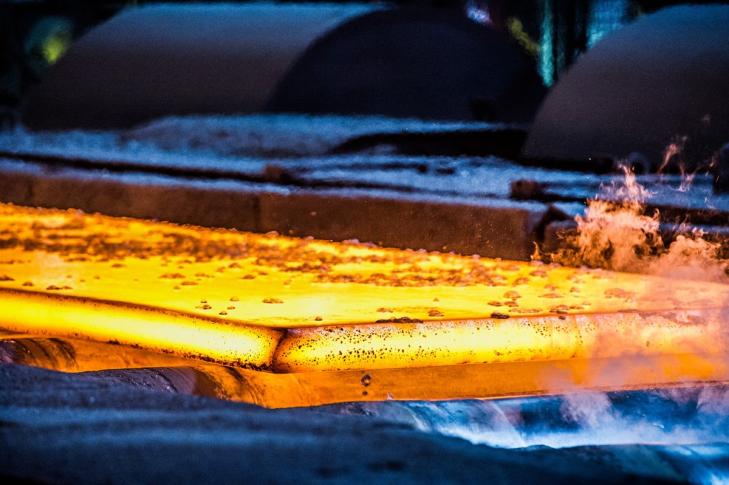
EU steel emissions to see higher penalties as free allowances get taken away
EU steel production emissions will be gradually penalized further from 2026 through to 2034, which will lead to higher costs for existing steel production and incentivize lower-emissions output.
The penalties based on carbon emissions emitted by key steel and raw materials production processes will increase under the EU’s Emissions Trading System and Carbon Border Adjustment Mechanism.
EU steel processes will see the quantity of allocated free emissions allowances reduce in a non-linear trajectory from existing levels to zero by 2034. This will lead to heavier emissions costs for producers forced to buy EU Allowance, or EUA, carbon permits for compliance. The ETS free allowances are to be replaced by the CBAM from 2026 and 2034.
The removal of free EUAs would lead to additional costs for steel producers exceeding benchmark levels. Based on reference values for blast furnace-based steel mills producing met coke and iron ore sinter, higher costs of around Eur144.72/mt of finished steel can be expected, with a reference cost for electric arc furnace carbon steel producers of Eur18.93/mt of steel, using July average EU carbon prices and analysis by S&P Global Commodity Insights.
Related podcast: How is Europe’s steel industry rising to the challenge of energy transition
Steel producers with higher operating emissions will be encouraged to adapt steel processes and raw materials usage, as well as invest, to transition more of the region’s production to steel with lower embedded emissions.
The alternative would be to pay to offset the difference, assuming risks on forward carbon pricing and using any banked EUAs available.

The dilemma may be how to manage the higher costs of alternative raw materials such as iron ore pellets and high-grade ferrous scrap, along with supporting the energy transition to use green hydrogen and renewable power and cut coal-based fuels.
Investment in new plants and processes to achieve low-emissions steelmaking have pushed steel companies such as Salzgitter and Thyssenkrupp to seek government subsidies and grants.
A move to certify emissions in steel production and mining, logistics and processing has allowed carbon-accounted steel markets to develop in the past few years.
Europe has led the interest in carbon-accounted steel and industry decarbonization, followed by Canada and the US and some markets in Asia.
The CBAM’s effect on global seaborne steel trade is anticipated to further deepen the interest in carbon-accounted steel production and marketing.
Steel end-users and steel processing and distribution groups are looking to adapt steel supplies for consumers, and to meet new procurement targets and standards. This is also pushing for more transparency around steel’s carbon intensities, with interest led by industry and government bodies.

Steel producers are currently obliged by the EU to report and pay for emissions from installations in the region based on the defined categories of hot metal production, iron ore sintering, met coke production and two types of electric arc furnace steel production.
Scope 3 emissions for steelmakers, emitted from raw materials mining, processing and logistics, are not included under the ETS reporting scheme.
The incoming CBAM will be applied for steel, pig iron and direct-reduced iron product imports, among other markets such as for aluminum, cement, hydrogen and fertilizers.
The CBAM aims to require the same carbon emissions cost being paid for imports as relevant to EU steel and other products, ensuring a level playing field and complying with World Trade Organization rules. The mechanism will take into account EU ETS and free allowances levels for applicable markets as the frameworks converge, in relation to certified carbon emissions for import products.
CBAM will develop reference emissions values for product categories where reported carbon intensity data is not available prior to the mechanism’s launch on Jan. 1, 2026.
Importers to the EU will buy CBAM certificates to comply with any outstanding product emissions costs required. CBAM certificates will price based on weekly EU Allowance pricing.
The CBAM will enter into application in its transitional phase on Oct. 1, with the first reporting period for importers ending Jan. 31, 2024.
Reporting obligations and information sought from EU importers of CBAM goods, as well as a provisional methodology for calculating embedded emissions released during the production process of CBAM-related imports will be specified further in an Implementing Regulation. This legislation will be adopted by the European Commission after consulting the CBAM Committee.
The CBAM and ETS will apply charges with adjustments available for steel production processes through to 2034, which mean steel imports are expected initially to pay a similar carbon-based charge. CBAM is not expected to include upstream Scope 3 emissions, emitted from mining and processing, logistics and transportation of steel raw materials.
Imported flat and long steels produced with ferrous scrap and direct-reduced iron may compete with more emissions-intensive steel in certain grades and segments.
European steel markets and user groups are increasingly differentiating on pricing and demand between steel with carbon emissions data reported for Scope 1, 2 and 3, and whether direct emissions cuts or mass balance-based calculated emissions reductions are involved.
A variation between the ETS and steel production emissions compliance, and a new focus on product-level carbon intensity with upstream emissions is seen. This considers emissions in the entire production chain and any differences between steel imports and EU origin products.
EU safeguards already place quotas on steel imports by origin. CBAM is designed to help ensure imports are on a level playing field with EU products and emissions costs, and support investments in industry decarbonization.
The reduction in the steel sector’s free EUAs may lead to higher compliance costs for steel producers if they cannot decarbonize at the same rate, as companies fund high capital greenfield plants.
Commission adopts detailed reporting rules for the CBAM’s transitional phase
On 17 August 2023, the European Commission adopted the rules governing the implementation of the Carbon Border Adjustment Mechanism (CBAM) during its transitional phase, which starts on 1 October 2023 and runs until the end of 2025.
The Implementing Regulation details the transitional reporting obligations for EU importers of CBAM goods, as well as the transitional methodology for calculating embedded emissions released during the production process of CBAM goods.
In the CBAM’s transitional phase, traders will only have to report on the emissions embedded in their imports subject to the mechanism without paying any financial adjustment. This will give adequate time for businesses to prepare in a predictable manner, while also allowing for the definitive methodology to be fine-tuned by 2026.
To help both importers and third country producers, the Commission also published today guidance for EU importers and non-EU installations on the practical implementation of the new rules. At the same time, dedicated IT tools to help importers perform and report these calculations are currently being developed, as well as training materials, webinars and tutorials to support businesses when the transitional mechanism begins. While importers will be asked to collect fourth quarter data as of 1 October 2023, their first report will only have to be submitted by 31 January 2024.
Ahead of its adoption by the Commission, the Implementing Regulation was subject to a public consultation and was subsequently approved by the CBAM Committee, composed of representatives from EU Member States. One of the central pillars of the EU’s ambitious Fit for 55 Agenda, CBAM is the EU’s landmark tool to fight carbon leakage. Carbon leakage occurs when companies based in the EU move carbon-intensive production abroad to take advantage of lower standards, or when EU products are replaced by more carbon-intensive imports, which in turn undermines our climate action.
For more information
Guidance and resources for EU importers and non-EU producers of CBAM goods
Further information on the CBAM can be found here.
